Because it is a large ticket item and one of the heaviest things in your pack the backcountry shelter you choose is one of your most important gear-buying decisions. To complicate matters, backpacking tents come in a bewildering variety of designs, from minimalist to surprisingly spacious.
To simplify choosing the right backpacking tent, you can break the process down into the following decision points:
Capacity: likely number of sleepers
Seasonality: tent construction relative to expected weather conditions
Weight: ounces carried vs. dollars spent Lighter=generally more expensive
Livability: well-placed interior space, headroom ease of access, ease of setup, etc.
Setup: features that can make setting up your tent easier
Materials: what fabrics to consider when shopping for your shelter.
Backpacking Tent Capacity
Backpacking tents are categorized by capacity: from 1- to 5-person models. Most tent names include a number to denote the capacity: for example, the REI Half Dome 2, or the Big Agnes Copper Spur 2 fits up to two campers, the 3 fits 3 people or 2 people and a dog.
To trim weight and bulk, backpacking tent interiors are often compact. There’s no industry standard that defines per-person dimensions, so sizes can vary from brand to brand. Ultralight models are likely to be extra tight. Upon comparison, the average 2 person tent dimensions are 86-90 inches long and 48-55 inches width. Smaller dimensions, lighter weight but reduced space. A couple inches more width can feel much larger, but length not so much, as you tend not to notice the space blow your feet. Consider also your existing gear. How wide and long is your sleeping pad and those of your partner(s)?
If you’re larger or crave more space, consider tents that are designated a person larger than your group. Consider this too if you plan to camp with a pet. Alternatively, you can hunt for a tent that’s one or two inches wider or longer than average. Some offer clues in the name, like a plus sign. For example, the REI Co-op Half Dome SL 3+ Tent with Footprint provides enough space for three people, plus gear or a furry friend. Always compare exact dimensions between tents you’re considering.
Backpacking Tent Seasonality
Your main choice is between a 3-season and a 4-season tent. Many backpackers, especially newcomers to the backcountry, will choose a three-season tent because it provides enough protection from wind, rain and bugs without weighing down your pack (backcountry shelters meant to withstand extreme weather are often heavier). But because worst-case weather scenarios won’t be the same for every trip, frequent backpackers sometimes choose to own more than one tent. Generally, 3-season tents are great for trips in the summer, spring and early fall, while 4-season tents are good for trips where you expect extreme weather conditions, like heavy snowfall or powerful winds (more below).
3-Season Backpacking Tents
These tents balance the need to keep weight low with the need to handle the wide range of conditions that spring, summer and fall can conjure up. Properly pitched, 3-season tents can withstand downpours and light snow but are not built for sustained exposure to harsh storms, violent winds or heavy snow. In my opinion you should always be prepared for high winds. There are few exceptions to this rule; tropical rainforests, perhaps.
Key features:
Near total rainfly coverage, it should overlap the floor.
Ample mesh panels to boost airflow and keep out insects
More upright walls to create more interior headroom
Fewer poles and lighter fabrics to keep weight low
Extended-Season Backpacking Tents (3-4 or 3+ Season)
These tweener tents are suitable for summer use but also trips in early spring and late fall when snow may be encountered. They’re also good for trips to exposed, high-elevation destinations where snow can surprise you. Key features (compared to pure 3-season models):
Fabric panels that can zip over mesh areas to keep out blowing snow or sand, and hold in more warmth.
One or two more poles (than a 3-season tent) for additional strength
Heavier fabrics and especially zippers, which are the least robust feature. See my comments below.
4-Season Mountaineering Tents
These winter tents are engineered to withstand fierce winds and substantial snow loads; however, they have less ventilation and can feel stuffy in mild weather. Key features (compared to 3-season and extended-season models):
More poles and more heavy-duty fabrics
Rounded dome designs that can sustain winds and eliminate flat roof spaces where snow can collect
Fewer mesh panels; or they might have zip fabric panels that let you cover the mesh panels when needed
Rainflys that extend close to the ground
Four-season tents also include lightweight single-wall tents that have waterproof/breathable walls and no rainfly. In humid conditions condensation can accumulate inside, so a single-wall tent is best for cold, dry conditions. When the weather is snow, they can work, but if it’s rain, condensation will build up and it is a real problem. Winter mountaineering is their best application. Ideally the outside temp is below freezing, otherwise drippy condensation nightmare.
Backpacking Tent Weight
The weight of your backpacking tent is a big part of your overall load, so tent designers work hard to keep it low. Your biggest tradeoffs to cutting weight are space, features and durability. If you choose carefully, though, you should be able to find a lightweight tent that feels reasonably roomy and comfortable to you.
While heavy-duty materials make a tent more durable, ultralight tents can be surprisingly sturdy. If you want a premium ultralight tent, you’ll pay more for ultralight-yet-strong materials. Also, the term “ultralight” is used liberally by brands—check specs carefully when you shop.
Key Tent Specs
Minimum trail weight: This is the weight of the tent body, rainfly and poles only. It is unrealistic. You will almost certainly pack more tent-related gear (e.g., tent stakes, a footprint). (Note that some ultralight shelters are designed to function without the need for a separate rainfly or tent poles, so their minimum trail weights will reflect only the essential components that come with those tents.)
Not using a stuff sack I can see, but more stakes rather than less is probably wise. You want to be prepared for severe weather, regardless of forecasts. On a long trip you might lose a stake. Furthermore if it is howling 50-60 mph winds you absolutely want to nail your tent to the ground and use every available tie out. Self standing tents become a sail if they pull loose from their stakes. Since most tents come with more tie-out points than stakes you should invest in a few extra stakes and carry them. Add parachute core to the extra tie-outs. Having to scrounge extra stakes, (think sticks or rocks) in the middle of a storm is a real drag.
Ditching the footprint can be a good option, but extra protection on the floor against moisture is really key in wet weather.
Packaged weight: This is the weight of all the components you get with a purchase: body, rainfly, poles, stakes, stuff sack, pole sack, instructions and more. For all intents and purposes the packaged weight is probably closer to what you will carry. A stuff sack adds weight, but also protects the contents of your pack against moisture. If you are packing up and setting up in the rain consecutively, having a dry stuff sack to isolate the wet tent can be literally a life saver. Once all your clothes are wet from stuffing the wet tent in with everything else, even on a short trip, you can be in danger of hypothermia.
Instructions can be left behind, you will be very familiar with the set up before you go into the field.
Packed size: The amount of space the tent takes up in a pack also relates to how easy a tent is to carry. Most tents have separate stuff sacks for poles and stakes. Take them, it is really important not to lose stakes or poles.It keeps them organized and easy to distribute among others; have your partner take the poles and rainfly, for example, while you carry the tent body and stakes. Ditch the long skinny stuff sack that comes with the tent and use two more round/oval shaped ones; one for the tent body and one for the fly. If you’re really obsessed by saving weight, you can stuff the tent and fly directly into the pack.
Minimalist Shelters
Most backpacking tents have a double-wall design that includes a main tent body (also known as the canopy) plus an exterior rainfly. If you’re a hiker who focuses on saving every possible ounce, you have additional options. You can save a few extra ounces when you leave the tent storage bag at home. If you have to pack up in the rain, it won’t be possible to isolate the wet fly and tent floor, the stuff sacks protect your dry clothes from a wet tent and fly. There are super light stuff sacks available, but they can be expensive.
Fly/footprint option: Many double-wall tents have an ultralight setup option, where the footprint (sold separately), poles and rainfly can be pitched together without the main tent canopy. This is an excellent option for saving weight, but no bug protection. I have found them to be almost as weather resistant as the tent and fly.
Tarp shelters: This catchall category includes ultralight rainflys that shield you from rain and snow, but not bugs or damp ground.
Hammock tents: This is a type of hammock that, at a minimum, also includes a tarp-like rainfly and bug netting. Be sure you can sleep in a hammock. They can be cold, the air is circulating underneath you all night, more than doubling your surface area. You will need insulation of some type underneath you.
Bivy sacks: Short for bivouac sack, this is a waterproof, breathable barrier for your sleeping bag.
Bug shelters: Most bug shelters consist of netting and some poles, but no floor. More elaborate models are tents where the entire canopy is made out of bug netting.
Backpacking Tent Livability
“Livability” is a catchall word for features that make the time you spend inside your tent more enjoyable. A big part of livability is how roomy—or cramped—a tent feels to you. Backpacking tents have traditionally had steeply sloped walls, minimal floor space and hardly any headroom to keep the weight low. However, that came at the expense of comfort. Thanks to advances in materials and designs that can help minimize weight, tent options today can offer a little more room. Below are a few specs to consider when assessing a shelter’s livability.
Floor dimensions (floor plan): Length and width measurements offer a rough idea of floor size. Many tents don’t have perfectly rectangular floors, so you might see dimensions like 85″ x 51″/43″ (L x W head/foot). A tapered floor provides needed room for shoulders and arms, while also saving weight by having a narrower foot.
Floor area: This number indicates total square footage of floor-level space. While helpful for comparison between tents, this number alone won’t tell you how efficiently the space is laid out.
Peak height: No one likes to bump their head when they sit up. Peak height, though, is measured at a single spot, so don’t rely solely on this spec to assess overall headroom. The test pitch (noted above) is much better way to assess that.
Wall shape: This is an even bigger factor in head and shoulder room—and overall tent livability—than peak height. The more vertical the walls, the more headroom. Study the pitch of a tent’s walls in online photos: If they angle steeply toward the tent’s ceiling, you’re looking at a more weight-efficient tent (great!) that offers only modest interior volume (the tradeoff).
Test-pitch tents: Visit a store and ask to set up prospective tents so you can hop inside them. Then make your mountain-storm pick: Which model would you choose if you had to ride out a violent storm for hours on end?
Additional Features that Improve Tent Livability
Rainfly color: Light, bright fly colors transmit more light inside, making the interior brighter. That will make a tent feel more spacious and make it a more pleasant place to be if a storm keeps you tentbound for an extended time. It also makes your tent easier to spot.
Doors: Tent designers focus on door shape, zippers and other adjustments, but the most important question is: How many? It’s nice when every sleeper has a door. Choosing a multiperson tent with a single door, though, cuts weight and cost.
Vestibules. These rainfly extensions offer sheltered storage for boots and other gear. An oversized floor area would offer the same advantage, but it would also create a heavier tent. Most tents have vestibules and their size is included in the specs. Bigger is better, but cavernous vestibules can add weight and cost.
Ventilation: You exhale moisture as you sleep and a tent needs ways to deal with that. That’s why features like mesh windows or panels and adjustable rainfly vents are important: They let you increase airflow to prevent condensation buildup inside. Being able to roll up rainfly doors or panels can also boost ventilation. As a bonus, it also lets you open up views to gaze at stars or witness the sunrise.
Storage: Don’t underestimate the power of interior mesh pockets. They’re helpful for keeping essential items within easy reach, which can be especially helpful when you’re searching for gear after dark. You can even slip a lantern or headlamp into an overhead pocket to illuminate your space.
Tent Setup
If possible, go to an actual store and check it out in person. If they’ll let you set it up, do it. Tents can look great in the ad, but turn out to be more difficult to set up, not as roomy as they look, etc.. When considering a purchase, there is simply no substitute for actually setting up and climbing into a tent.
It’s always wise to set up a tent once or twice at home, on actual dirt or lawn before trying to do it in the wilderness. Practice doing it in the dark, in case you have to unexpectedly on your trip. Regardless of where you pitch it, the following features can make setup easier:
Freestanding design: This simply means the tent can stand without the use of stakes, which speeds setup and makes a tent easy to reposition—just lift and move it to a new spot. Most tents are freestanding for this reason, though non-freestanding tents can be lighter because the pole structure doesn’t have to be as robust.
Pole hubs: The beauty of hubs is that they take the guesswork out of assembly. You take the folded pole sections out of the duffel bag and unfurl the skeleton, seating segments as you go. Smaller cross poles might be separate from the hub, but those are easily identified after the main pole assembly is complete. The other major benefit of hubs is that they allow tent walls to be more vertical to create a more livable interior space. They are more difficult to manage on the breakdown end, however. You often find yourself needing 3 hands. Faster on the set up, slower on the packing up side.
Pole clips: Poles connect to tent canopies via clips, sleeves or a combination of the two. Pole sleeves’ fabric tension provides a stronger pitch, but threading poles through them can be a challenge. Pole clips are lighter and easier to attach. They are far faster and easier to use than pole sleeves. They also allow more airflow underneath the rainfly, and more distance between fly and canopy, which reduces condensation and touching the tent to the inside of the fly. Much easier to pitch in the wind.
Color coding: This helps you quickly orient each pole tip to the correct tent corner and helps you find which sleeves or clips go with which pole sections. .
Tent Materials
Poles: Backpacking tents have high-strength, low-weight aluminum poles. Easton Aluminum was for many years virtually the only manufacturer of backpacking tent poles. DAC (Dongah Aluminum Corp.) has been around for at least 20 years. Their poles are usually lighter and arguably more durable. I have a heavily used 50 year old dome tent and the Easton poles are fine. Fiberglass shows up in cheap tents (think Wal-Mart). They are much heavier than aluminum and fragile; I have never seen a fiberglass pole set hold up to 50 mph winds, not even on a new tent. Further more if they do fail they splinter, punching small (or worse, large!) holes in the fly and canopy. Consider carrying a pole sleeve for repair in the field.
Tent fabrics and denier: A wide range of specialized nylons and polyesters are used in tents. One spec you occasionally see is denier (D), which is a fabric yarn’s weight (in grams) based on a 9,000-meter length of the yarn. More rugged fabrics have higher denier numbers, while lower deniers are found in more lightweight—and less durable—fabrics. Don’t compare denier unless fabrics are identical, though, because inherent differences in fabric properties have a greater effect on strength than the denier spec. Even super low denier fabrics are very strong.
Tent strength. The strongest tents have more poles and heavier fabrics, and combine them in sturdy design architectures. The only spec that relates to strength, though, is a tent’s seasonal rating—a 4-season tent will be stronger than a 3-season tent.
A FEW THOUGHTS ON STRENGTH AND MATERIALS
There is a tremendous focus these days on lightweight gear, which on the surface is a great idea. By keeping the load light you can go further, and therefore faster and arguably, more comfortably. But just going farther and faster, for me, is not the point. You want to enjoy the experience, without being worried about gear failure ruining your trip, Lighter weight gear is often far less durable than standard gear. There are some gear choices where weight should not be considered the primary consideration. A little weight is a small price to pay for peace of mind. When you are on the trail a week from the nearest trail-head, the lifetime warranty on your tent or pack or boots doesn’t mean squat. What you need for extended use in changeable conditions is gear that doesn’t fail in the first place, and often that means a little heavier materials.
What the lifetime warranty on your gear tells you is that the company is confident that their gear will hold up. From a practical perspective it means they cover “materials and workmanship”, in short zippers and seams. Ultralight tents, for instance, save weight in two main ways: Fabric weight in the canopy and fly, and zippers. Fabrics in modern ultralight tents are plenty strong, no real concerns there. The zippers are another story. The pole material can also be an area for weight savings, but the lightweight carbon fiber can shed splinters even after extended use. Aluminum poles by Dak or Easton are the industry standard and cover the vast majority of models on the market. This is no accident, fiberglass poles are heavy and will almost always fail in a strong windstorm. Both fiberglass and carbon fiber are a nightmare if they break; they shatter and splinter and thereby put holes in your tent and fly. Stick with aluminum.
When thinking about a tent purchase you should find a brick and mortar store that carries the models you are interested in. Take the tent out of the stuff sack. If the store allows it, set it up. Check the size of the zippers on both the fly and the tent itself. Zip and unzip them several times and notice any sticky spots or areas of greater resistance. These are potential points of failure. Maybe not right away, but you don’t want a problem several days into a trip. Most tents have 2 sliders on the main zippers. This is key; if one slider fails you can use the other one. When coil zippers fail it is almost always the slider spreading a little and not meshing the two sides of the zipper. Virtually every tent uses coil zippers, as they are lighter and less bulky than tooth zippers. But not all zippers are created equal. YKK is the industry standard brand of zipper. The larger the number of the zipper, the more robust the zipper. Since the actual coils of the zipper rarely gets damaged, it is really about the slider. Smaller sliders deform more easily, so a bigger slider (and by extension a bigger zipper) is less likely to fail in the field.
When checking the zipper, look for the YKK logo on the slider pull. Most gear descriptions on websites will not mention what size zipper is used in construction. Even the salesperson at the store may have no idea what size zipper is on a piece of gear. This is where visual inspection of the actual product is key. If the zipper slider is silver instead of black it means that it is most likely a nickel slider, which is far tougher than the standard black metal. This is always a good sign. Nickel is heavy though, which is why most companies use the black version. Rule of thumb in my book is this; you want at least a YKK #5. The #3s used on many lightweight tents are too light. A 50 mph windstorm may be enough to make a #3 fail, even on a brand new tent. If the tent is not using a YKK, I would strongly consider another model or brand.
Examine the tie out points, make sure they’re reinforced and have large loops that will accommodate an alternate stake, in case you end up short on stakes and have to use a stick or maybe a rock. In the winter, ski pole and skis can make excellent alternatives.
The one person size will be pretty tight, most people will go for a two person even on a solo trip. The extra space is nice if you have to spend a lot of time in it due to weather. It also gives you the flexibility to add another person in case of an emergency.
Design and size is important. Shape matters here. Roundish domes shed wind from all directions, rectangular and tapered shapes need to be set up to angle wind pressure. This is not always possible due to wind changing directions and the geography of the individual camp site. Hence the popularity of the dome and modified dome designs, The geometry is tried and true.
Dome tents are efficient, self-standing and generally pretty architecturally strong. A modified version with steep vertical walls will provide more interior headroom, but may lose a little wind-shedding ability. The more streamlined tents can often be great at deflecting wind, but often this ability is dependent on the tent being set up in a certain direction. Since the wind is notoriously shifty, the shape should be strong in every direction. Always set it up a before a trip (or purchase!) and check the integrity of the zippers and rain fly. One of the main advantages to a dome or modified dome is the simplicity of the pole configuration. A rectangular floor plan, where the poles run diagonally from corner-to-corner and cross in the middle is a simple, easy to set up design and it use a minimum of poles, keeping it light and very strong. More complicated pole designs can be difficult to manage, especially in the dark and doubly so in wind or weather. Most tents have 2 doors, which allows you to get in and out without climbing over your partner. Keep in mind that this ability goes away when the fly is on, as most tents only have one door in the fly.
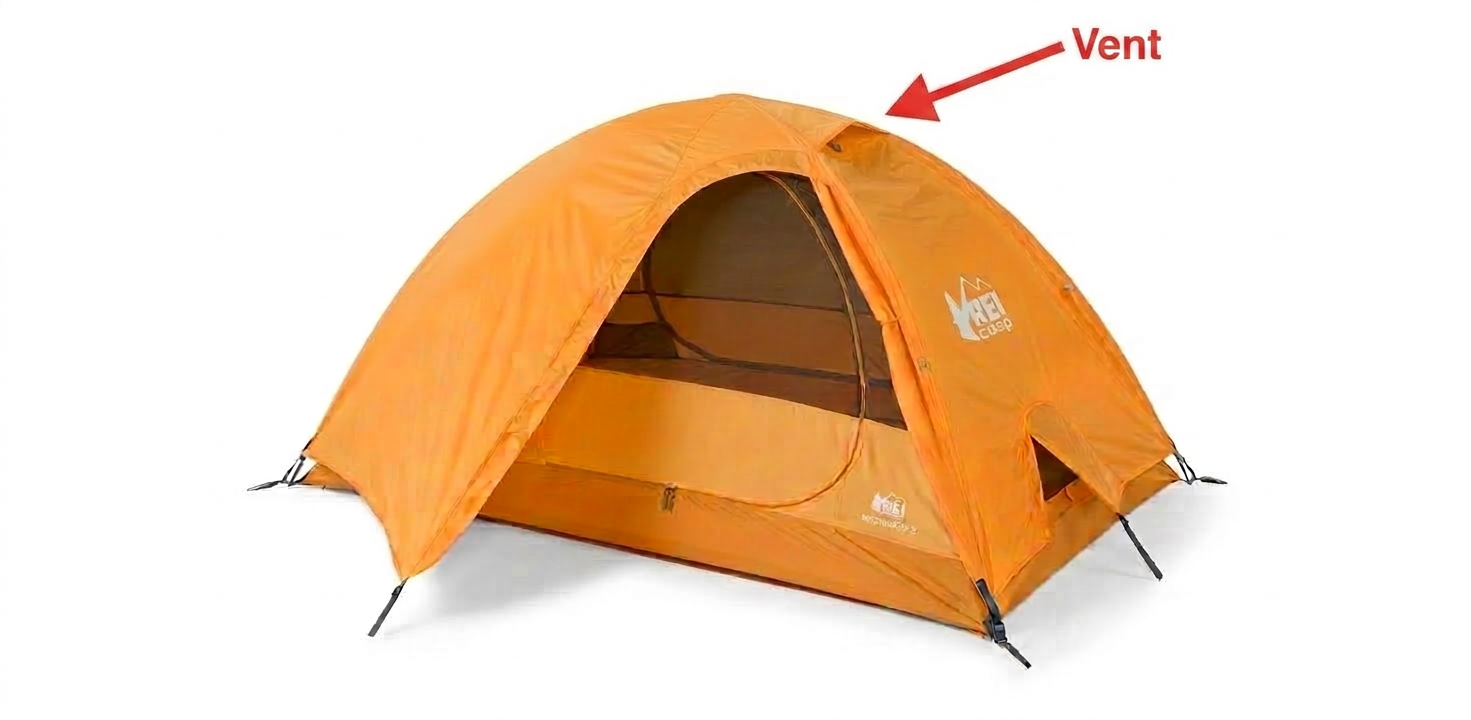
Note the vent at the top. Many tents have this feature. Not really a good idea, in this location. It is supposed to allow the condensation to vent. In reality it is a hole in the top of your waterproof rain fly. Any evaporative relief is negated by the chance of wind driven rain making its way inside and getting you wet. If you keep the vent closed there is still a good chance of leakage, as the Velcro patch used to close the vent leaves gaps on either side. Also when the air is saturated with moisture, it won’t absorb water, so the question of circulation is moot, but leakage by wind driven rain is near certain.
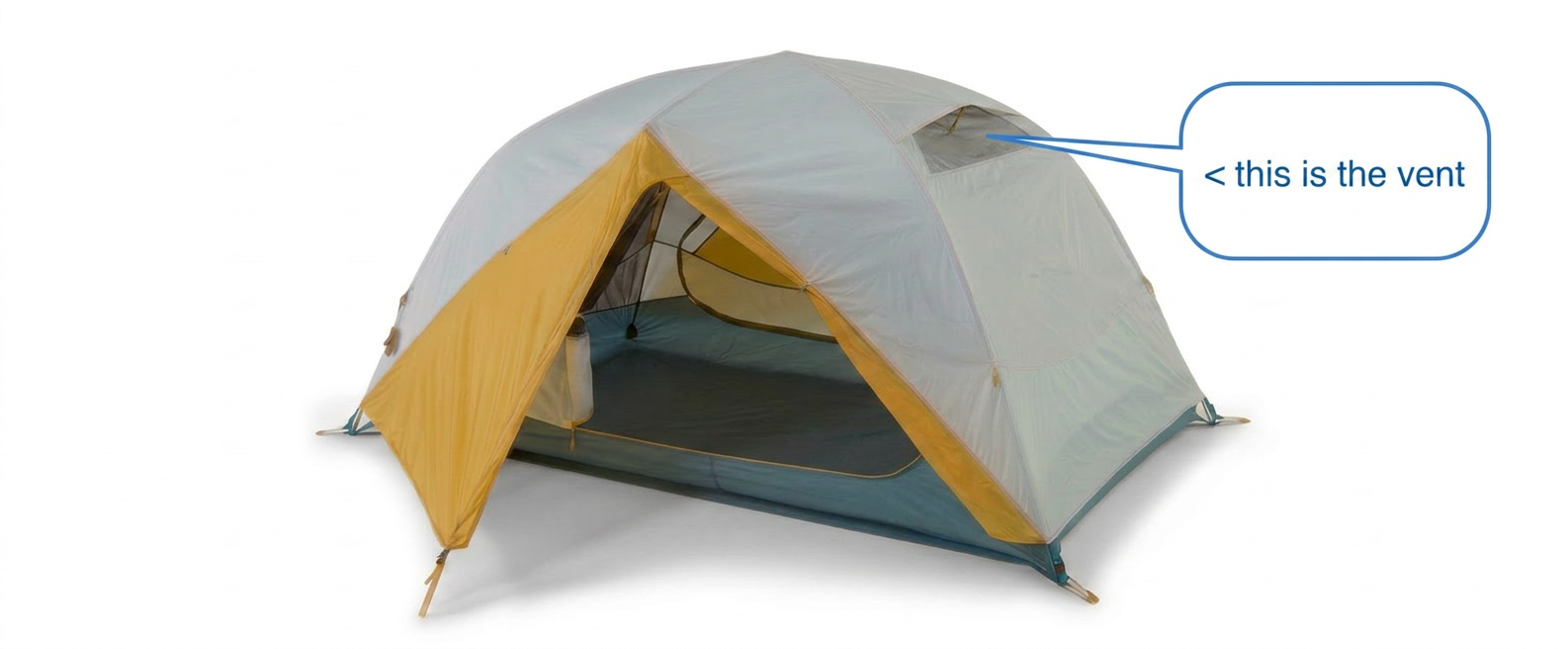
The Mountain Hardwear Mineral King II $350.00
For more demanding weather consider the All Weather version of the Mineral King $550. Heavier yes, but warmer and sturdier for colder conditions, which can often mean snow or rain-snow mix.
These are just two examples of a multitude of choices. Start your research now!
For specific questions about an individual tent or questions about tents in general contact Warren through the email link on this site:
Click here https://www.adventuretravelconsultant.com


Leave a Reply